As market supervision tightens and trade globalizes, product testing and certification is unavoidable. China has more than 20,000 testing and certification bodies — how should a company choose a suitable, professional, authoritative third-party laboratory?
How should we choose a third-party testing laboratory?
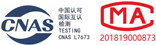
1. First check whether the laboratory holds relevant accreditation, such as CNAS and CMA. That shows reports are usable and that the lab is professional and authoritative.
2. Judge service from peer experience. If a product fails or problems arise, the lab’s attitude and ownership decide whether issues are solved in time.
3. Can the lab solve certification problems on its own? For CE, FCC, CCIC and similar, engineers must be able to propose corrective actions when tests fail, so the product can still obtain a valid certificate and report.
4. Match the laboratory to your needs. Global brands are well known but often charge 1–2 times more than domestic third-party labs. Many companies want lower cost without giving up professional, usable reports. Domestic labs are more flexible and cheaper; the main difference is the issuing body. Certificates and reports from competent Chinese third-party labs are also accepted by overseas customers and customs.